A good bed frame does more than hold a mattress off the floor. It shapes the entire feel of a bedroom and quietly influences how well you sleep, how easily you move around, and how the room reads visually the moment you walk in. If you have landed on the queen size, you have already made one of the smartest choices in modern furniture planning. The format offers plenty of room for a single sleeper who likes to stretch, comfortable space for two, and a footprint that fits the average primary bedroom without dominating it. Still, choosing the frame itself can feel oddly complicated. There are platforms, sleigh beds, panel beds, storage beds, upholstered options, low-profile builds, and dozens of finishes. This walkthrough steps back from the marketing noise and treats the purchase like the practical project it really is. You will find a straightforward sequence for measuring your room, comparing frame styles, evaluating materials, checking the details that actually matter, and setting the bed up so it feels solid from day one. Follow the steps in order and you will land on a frame that fits your space, your habits, and your budget.
Understanding What a Queen Bed Frame Really Delivers
A queen bed frame is defined by the mattress it holds, which measures sixty inches wide by eighty inches long. The frame itself extends a few inches beyond that in every direction, and the exact footprint varies depending on the style. A slim platform frame might add only two or three inches to each dimension, while an upholstered frame with a padded headboard and a matching footboard can push the overall length past ninety inches. Knowing the actual outer dimensions before you shop prevents the frustrating situation of receiving a beautiful bed that blocks a closet door or forces the nightstands into the hallway.

Beyond size, the frame determines how the mattress is supported. Most modern queen frames use either a slatted platform, a metal grid, or a solid panel base, and each style handles weight differently, produces its own level of noise over time, and pairs with a different kind of mattress. A well-built queen size bed frame from a reputable maker should support a properly distributed weight of at least six hundred pounds without flexing, sagging, or squeaking. If you are shopping across silhouettes and finishes, browsing a curated furniture collection like the one at CHITA LIVING helps you compare shapes side by side rather than jumping between generic listings. Think honestly about your sleep habits, whether you share the bed with a partner or a pet, and how often you tend to move house before you commit. A queen frame is furniture you should reasonably expect to keep for a decade or more, so a little planning up front pays back for a long time.
Measure Your Room Before You Fall in Love With a Frame
Before you compare styles, take five minutes to measure. Start with the length and width of the bedroom, then note the position of every door, window, radiator, closet, and electrical outlet along the walls that could hold the bed. The most common mistake is choosing a frame based on aesthetics only to discover that the headboard blocks a window or the footboard eats the walking path to the bathroom. A tape measure and a piece of paper are far more useful at this stage than any online configurator.
Aim for at least thirty inches of walking clearance on the sides of the bed where you plan to get in and out. If the room is tight, thirty inches on one side and twenty on the other still works. For rooms shared by two people, both sides should have that thirty-inch buffer so nobody has to shuffle sideways in the dark. Leave at least twenty-four inches at the foot of the bed for putting on shoes, opening a storage chest, or simply passing through. Ceiling height matters too. Tall upholstered headboards can dominate rooms with standard eight-foot ceilings, while low-profile platform frames make even small rooms feel airy. If your ceiling is low and your window sits high, avoid frames that raise the mattress far off the floor, because the visual weight of the mattress can crowd the windowsill and make the wall feel top-heavy.
Comparing Materials and Construction Choices
Once the room dimensions are on paper, choose a construction style that matches how you live. Solid hardwood frames, typically made from oak, walnut, or birch, are the gold standard for durability and quiet stability. They add real weight to the room, both physically and visually, and they age gracefully as long as they are kept out of direct sun and away from radiators. Engineered wood, which combines hardwood veneers with dense internal panels, delivers a similar look at a lower price and lighter shipping weight. It is a smart middle ground for renters who move often, though it does not hold up to repeated disassembly quite as well as solid wood.
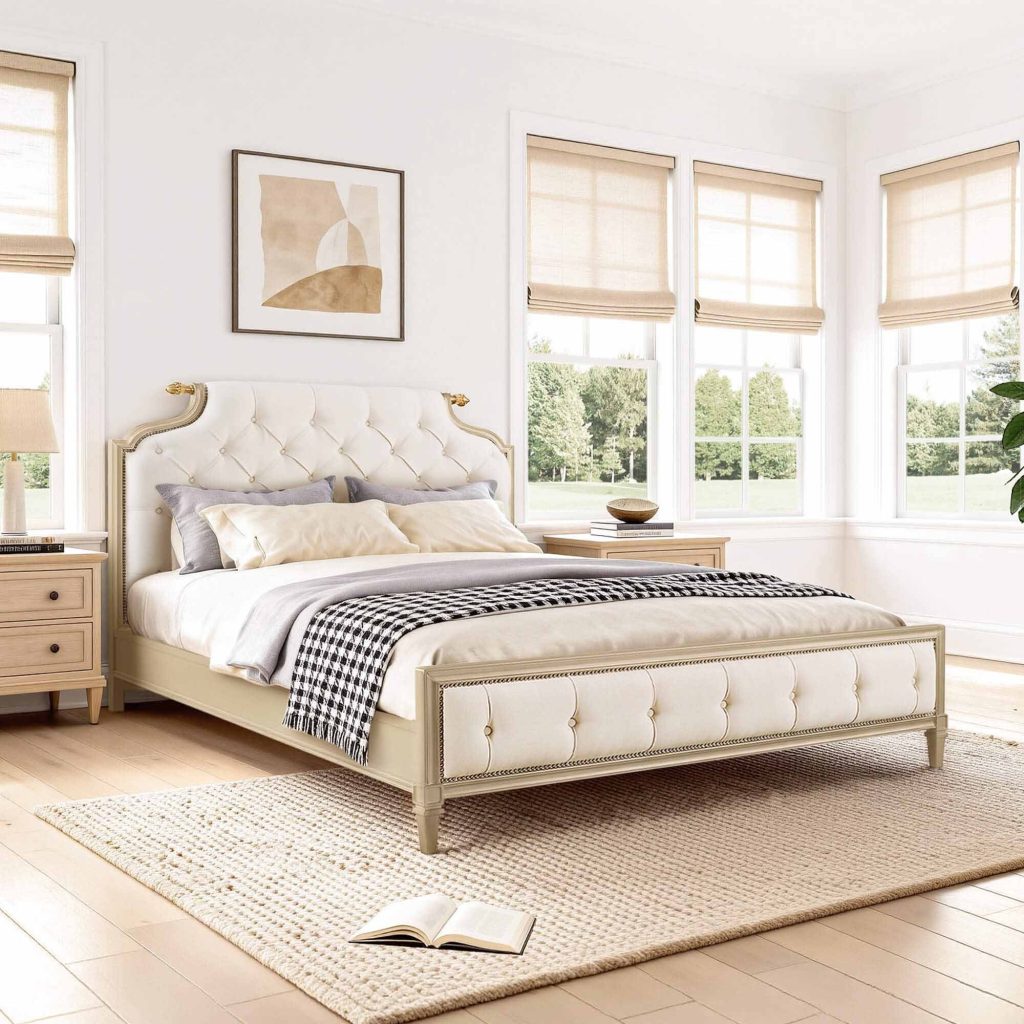
Metal frames come in two broad camps. Traditional wrought iron and steel tube frames offer a light, industrial look and tend to be the most affordable option on the market. High-end steel platform frames with reinforced center supports are sturdier and quieter than their reputation suggests, especially when they include noise-dampening rubber caps between the slats and the rails. Upholstered frames wrap either a wood or metal skeleton in fabric, most commonly a durable performance weave or a soft boucle. They soften the room, muffle ambient noise, and give you something comfortable to lean against when reading in bed. The trade-off is more careful cleaning, so look for removable, machine-washable panels if you have pets or young children. Whatever material you land on, focus on the joinery. Screwed corner brackets are stronger than staples, and dovetail or mortise-and-tenon connections outlast pure glue joints by years.
Comparing Frame Styles Head to Head
Frame style is where personal taste finally meets the practical filters you have already applied. Platform frames sit low, use built-in slats, and skip the need for a box spring, which makes them a clean choice for foam or hybrid mattresses. Panel beds add a headboard and footboard for a more traditional silhouette and pair naturally with a low-profile foundation. Sleigh beds curve outward at the head and foot for a classic, formal look, so measure the extra length before you commit because they occupy more floor than their marketing photos usually suggest. Storage beds add drawers or a lift-up frame that reveals a large under-mattress compartment, which can transform a small room by absorbing what a dresser would normally hold.
Upholstered beds vary widely in profile, from tall wingback silhouettes to slim, minimalist panels. If you find yourself torn between two styles, imagine your bedroom five years from now rather than five weeks from now. Trend-driven frames age faster than neutral silhouettes, and a queen frame is not the kind of purchase you want to replace on a whim. Prioritize a shape you can genuinely live with through changing color palettes and bedding refreshes, because the frame itself will outlast several rounds of pillows, quilts, and paint.
Setting Up Your New Frame So It Feels Solid
When the frame arrives, take fifteen quiet minutes to unpack every piece before you start assembling. Lay hardware on a tray so nothing rolls under the mattress, and read the instructions once from beginning to end. Most modern queen frames are engineered for assembly by one person, but recruiting a second pair of hands makes the process faster and safer, especially when it is time to lift the headboard into place. Start with the head and foot pieces, then attach the side rails loosely so you can align every bolt before final tightening. Rushing to torque bolts one at a time can twist the frame and leave the corners misaligned.
Once every rail and support is loosely connected, tighten in a diagonal pattern the same way you would with a car wheel. This keeps tension even across the frame and prevents the wooden joints from stressing on one side. Slide the slats or platform panels in place, confirm they sit flush in their brackets, and gently rock the whole assembly. A quality frame should barely move. If you hear creaks or feel wobble, back the bolts out a quarter turn and re-tighten. Finally, position the mattress and let the frame settle for a day before adding a heavy bedding stack. A short break-in period gives the joinery time to seat properly, and the bed will feel noticeably quieter for it.
Bringing the Bedroom Together
The right bed frame is a quiet foundation for everything else the bedroom does, from reading and dressing to hosting a pet at the foot of the mattress and, of course, sleeping. When you approach the purchase as a series of small decisions rather than one overwhelming choice, the process becomes almost calming. Start with the room, then the material, then the style, and finally the setup, and you will end with a piece that feels considered rather than compromised. Keep a note of the exact outer dimensions and hardware types in a drawer somewhere. A year or two later, when you rearrange the room or move to a new place, you will thank yourself for the reference. A queen frame chosen this way tends to disappear into daily life in the best possible way, doing its job silently while the room around it changes. Take your time with each step, trust the measurements over the marketing photos, and the result will hold up for as many years as you need it to.
