The relationship between pets and their guardians has entered a decidedly new chapter. Where wellness was once measured by intuition and the occasional visit to a clinic, today an expanding chorus of veterinarians, behaviorists, and data scientists is pointing to a broader movement: the shift toward continuous, in-home health awareness. At the center of that movement sits the pet health monitor, a category of connected devices that quietly gathers signals about heart rate, activity, temperature, and behavior, then translates them into insights owners can actually use. Industry analysts increasingly view the rise of these tools as evidence of a structural change in how modern households think about companion animals. Pets are treated as family members, and family members receive proactive, evidence-based care. Understanding the authority behind this trend, and where the technology is heading, has become essential reading for anyone invested in the future of home pet care.
From Fringe Gadget to Household Standard
Only a decade ago, in-home tracking for pets was a curiosity confined to hobbyists and early adopters. Today, the picture looks fundamentally different. Consumer research firms note year-over-year growth in the smart pet devices segment that outpaces most other connected home categories. The shift is driven less by novelty and more by a maturing set of expectations. Owners now expect the same kind of biometric fluency they receive from their own wearables. A modern pet health monitor takes on the role once reserved for annual checkups, delivering steady baselines that would otherwise be impossible to capture during a brief clinical visit.
Veterinary conferences from Copenhagen to San Diego now include dedicated tracks for connected animal health. The professional community treats these devices not as playthings but as legitimate data sources with growing clinical relevance. That legitimacy, in turn, feeds public confidence. When practitioners cite trends captured by home devices during consultations, the perceived authority of the technology grows. What began as a niche has quietly become an anchor in the emerging architecture of preventive companion medicine, and analysts expect the trajectory to steepen as insurance providers, breed-specific health programs, and shelter medicine groups begin to reference device-derived baselines in their own guidance.
What the Data Reveals About Modern Pet Wellness
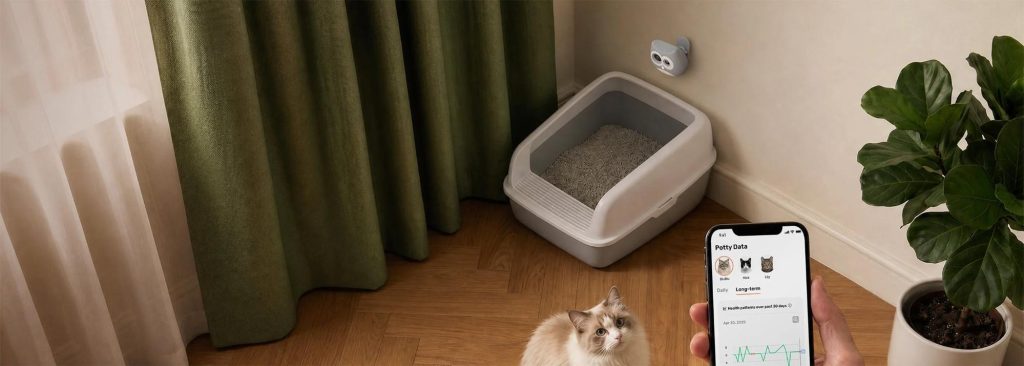
Longitudinal data from connected devices offers a striking view of how animals actually live inside a home. Sleep patterns, ambient temperature response, meal-related activity spikes, resting heart rate, and micro-behaviors like restlessness or lethargy can all be captured in ways that clinic visits simply cannot replicate. Where a single checkup provides a snapshot, continuous monitoring provides a documentary. That distinction matters because many meaningful health signals appear as deviations from an individual baseline rather than as absolute values, and only sustained observation can establish what normal really looks like for a particular animal.
Analysts studying aggregated device data have observed that early behavioral changes often precede clinical symptoms by days or even weeks. A dog that begins pacing at night, a cat whose grooming frequency subtly decreases, or a senior pet whose resting heart rate creeps upward can all point to underlying conditions long before overt symptoms appear. This is why experienced clinicians increasingly view home data as a partner to their examinations rather than a distraction from them. The signal is not the alert itself but the pattern behind it, and pattern recognition is precisely what continuous monitoring platforms are engineered to do.
The Science Behind Continuous Monitoring
The engineering that powers today’s category rests on a convergence of miniaturized sensors, low-power radios, and adaptive machine learning. Photoplethysmography, once found only in medical devices, now fits into collars slim enough for small breeds. Accelerometers capture posture and gait with millisecond precision. Thermistors housed in soft-touch enclosures read peripheral temperature without disturbing the animal. Each stream on its own is modest. Fused together and interpreted over time, they produce a portrait of wellness that would have been unattainable a generation ago.
Machine learning is the interpretive layer. Rather than surfacing raw numbers, contemporary systems learn what is normal for a particular animal, at a particular age, in a particular home. Alerts are calibrated to the individual, not to a species-wide average. This individualized approach is one reason authoritative voices in veterinary informatics consider today’s devices meaningfully different from the fitness trackers of the mid-2010s. Peer-reviewed studies now examine everything from heart rate variability in canine anxiety to activity-based indicators of feline osteoarthritis, giving practitioners a growing body of literature to draw upon when interpreting what home devices report.
How Veterinary Practice Is Adapting to Home Data
Clinics are increasingly building workflows around information generated outside their walls. Practitioners request device summaries ahead of appointments, use them to focus physical examinations, and refer back to them when adjusting treatment plans. For chronic conditions like early-stage kidney disease or feline hyperthyroidism, longitudinal home data can be the difference between reactive treatment and proactive management.
Specialty groups have begun issuing informal guidance for evaluating device data with clinical rigor. This includes recognizing artifact from movement, understanding the confidence intervals reported by monitoring systems, and integrating findings into the medical record. The influence flows both ways. As clinicians grow more comfortable with device data, manufacturers refine what they surface, producing a feedback loop that has elevated the entire category. Brands with strong veterinary partnerships, including SiiPet, have contributed to this maturation by aligning the framing of alerts with clinical language rather than consumer-app conventions, an editorial choice that quietly reinforces trust across both audiences.
Trends Shaping the Next Generation of Devices
The trajectory ahead is defined by three converging themes: multimodal sensing, edge intelligence, and interoperability. Multimodal sensing means devices that combine physiological signals with behavioral and environmental context. A rising heart rate on its own is ambiguous. The same rise correlated with elevated household temperature, a recent meal, or an approaching thunderstorm becomes interpretable, and it is this contextual fluency that separates the current generation from what came before.
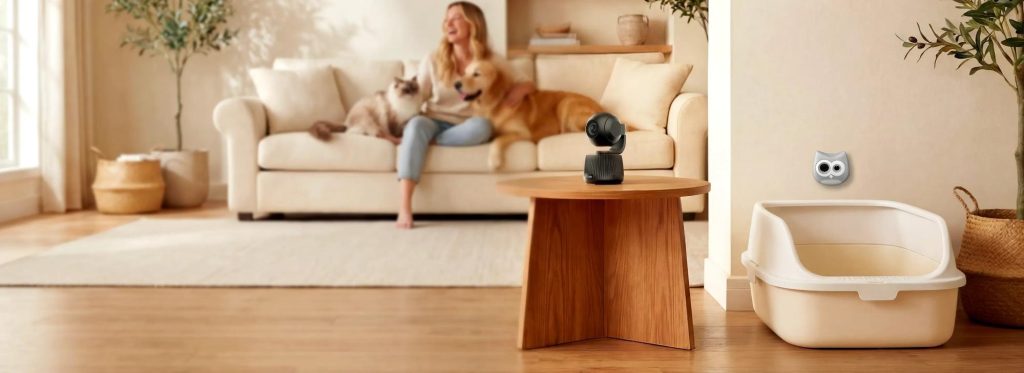
Edge intelligence, in which analysis happens on the device rather than in a distant server, shortens the loop between signal and action. Latency drops from seconds to milliseconds, and personal data can stay within the home. Interoperability, meanwhile, is the quiet revolution. Emerging standards allow monitors to communicate with feeders, water fountains, climate systems, and litter analyzers, creating a coordinated wellness environment rather than a set of disconnected apps. The result is not a smarter device but a smarter household, one where each element informs the others and the animal at the center benefits from the whole system operating in concert.
Where Authority Meets Everyday Use
Even as the underlying science advances, the ultimate test of any monitor is whether it produces usable insight for real households. Households value clarity: a well-designed device tells an owner what changed, why it might matter, and what to do next. The authority of the category, then, is not only technical. It is communicative. The most respected products are those that translate complex signals into calm, actionable guidance rather than into anxious streams of raw data. SiiPet and other thoughtful designers have made this translation a core discipline, treating language as carefully as they treat sensors, because the trust of the owner is what ultimately turns a stream of measurements into better decisions for the animal.
This is also where the trend meets an important cultural shift. Owners no longer view themselves as passive recipients of veterinary knowledge. They participate. They come to the clinic with context, with history, and with questions rooted in what they have observed at home. Continuous monitoring supports that participation without asking owners to become clinicians. The device does the watching. The owner does the caring. The professional does the diagnosing. Each role is preserved, and the collaboration is stronger than any single perspective could be.
A New Era of Preventive Companion Care
The pet health monitor is no longer a novelty at the periphery of pet care. It has moved to the center, backed by veterinary practice, informed by sound engineering, and validated by the everyday experiences of owners who now catch issues earlier and manage conditions with more confidence. As sensors improve, models learn, and standards align, the category will continue to blur the line between the clinic and the couch. The authoritative message from those closest to the field is straightforward: continuous, respectful, individualized monitoring is becoming a baseline expectation of modern companion care, and the households embracing it are shaping what quality of life for pets will mean in the years ahead.
