Your living room deserves more than a flat surface to hold your television. A well-chosen modern TV stand anchors your entire entertainment space, balancing style with the practical storage your home actually needs. Yet most people pick one based on size alone and end up with a piece that either overwhelms the room or leaves cables dangling and remotes missing.
Choosing the right TV stand means thinking through dimensions, storage capacity, material durability, and how the design fits the rest of your furniture. This guide walks you through every factor that matters — from measuring your space correctly to matching wood finishes and hardware — so you end up with a stand that works as hard as it looks good. Whether you’re furnishing a compact apartment or a spacious family room, the principles here apply across every style and budget.
Why a Modern TV Stand Is More Than Just a Furniture Piece
In contemporary home design, the area around your television is often the focal point of the room. Every guest who walks in naturally looks toward the screen, which means the stand supporting it is immediately noticed. A dated or mismatched unit can undercut an otherwise polished interior, while a thoughtfully selected modern TV stand pulls the entire space together.
Beyond aesthetics, today’s TV stands are engineered to solve real organizational problems. Streaming devices, gaming consoles, soundbars, and their associated cables have multiplied over the past decade. Without adequate, purpose-built storage, these components end up stacked on top of each other or shoved behind furniture. A quality media console with compartmentalized shelving, dedicated cable management cutouts, and enough depth to house full-size receivers changes how the space feels and functions day to day.
Modern design also tends to favor clean lines and minimal ornamentation, which makes furniture easier to style around. A solid wood TV stand in a neutral finish, for example, can sit comfortably alongside mid-century armchairs, Scandinavian sofas, or contemporary sectionals without demanding you redecorate everything else. That flexibility is a genuine long-term value, especially if you move or refresh your decor over the years.
How to Measure Your Space Before You Buy
Measurement errors are the most common reason people return furniture, and TV stands are no exception. Getting this right before you order saves you the hassle of a return and ensures the piece actually fits your room.
Width: Match the Stand to Your Screen
A general rule is that your TV stand should be at least as wide as your television, but ideally wider. For a 65-inch screen, a stand in the 71-to-79-inch range typically looks proportional and provides surface space on either side for decorative objects or speakers. Going too narrow makes the screen appear to float precariously; going too wide risks making the stand the dominant object rather than a complement to the television itself.
Height: Keep Viewing Comfortable
Viewing height is often overlooked. When seated, the center of your screen should land roughly at eye level, which for most sofas means a screen center between 42 and 48 inches off the floor. Measure the height of your TV stand, add half the height of your TV, and confirm that number falls within that range. Stands that are too low push the viewing angle upward uncomfortably; ones that are too tall create neck strain over long sessions.
Depth: Account for Components and Clearance
If you plan to store AV components inside the stand, check the internal depth of each compartment against the depth of your devices. Most receivers and cable boxes need between 12 and 16 inches of clearance. Also verify that the stand’s total depth leaves enough room for air circulation behind components, which prevents overheating.
Choosing the Right Material for Longevity and Style
Material choice shapes both how a TV stand looks and how long it holds up under daily use. The market offers everything from budget particleboard to fully solid hardwood, with meaningful differences in durability, finish quality, and environmental impact.
Solid Wood: The Long-Term Investment
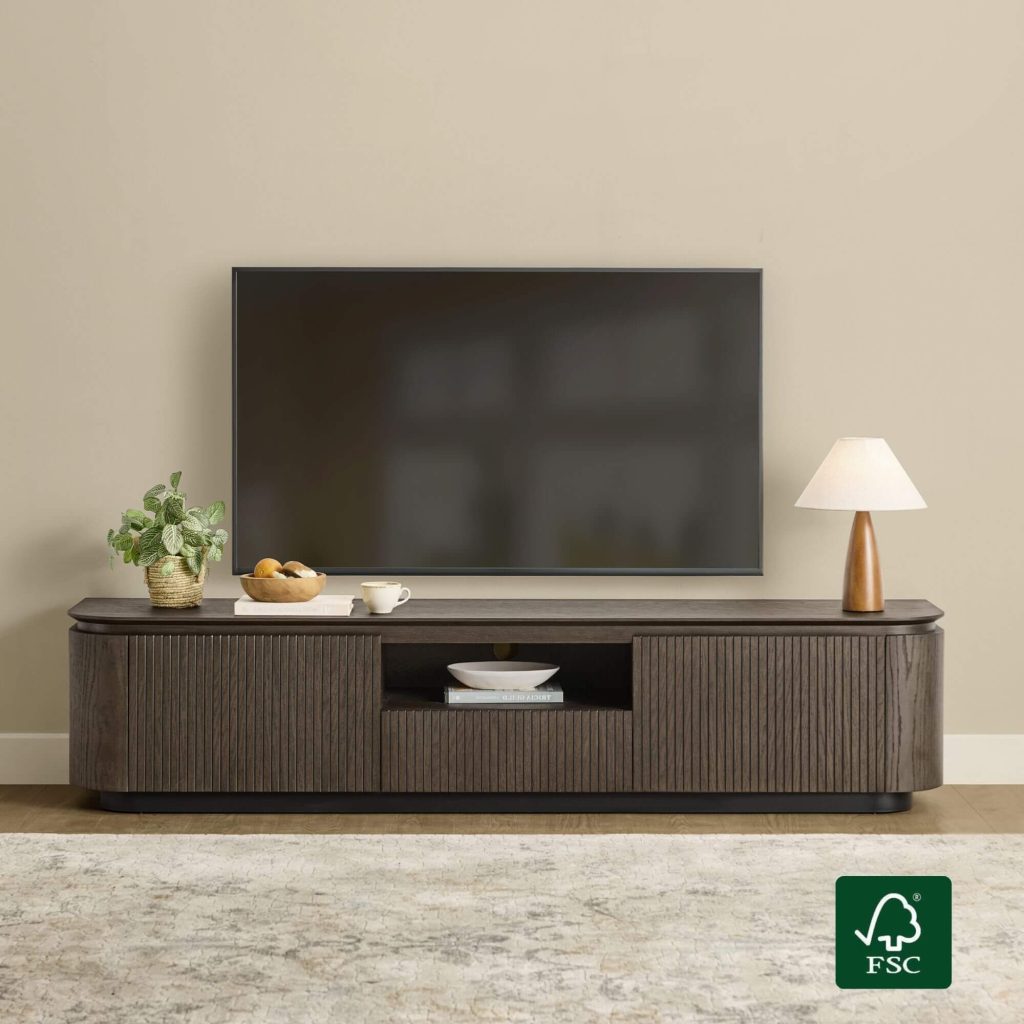
Solid wood TV stands are heavier, more expensive, and more resistant to sagging over time than engineered alternatives. They accept refinishing well, meaning a scuff or scratch doesn’t end the piece’s useful life. Oak, walnut, and rubberwood are common choices in modern furniture, each offering a distinct grain pattern and warmth that veneers struggle to replicate convincingly. If you want furniture that improves with age and doesn’t need replacing every few years, solid wood is worth the higher initial cost.
Engineered Wood and MDF: Budget-Friendly Options
Medium-density fiberboard and engineered wood products can achieve clean, consistent surfaces that work well in contemporary settings. They’re lighter and less expensive than solid wood, making them practical for renters or anyone who moves frequently. The trade-off is susceptibility to moisture damage and a shorter lifespan under heavy loads. For a stand that will hold a large TV and multiple heavy components, check the weight rating carefully before committing.
Accent Materials: Travertine, Rattan, and Metal
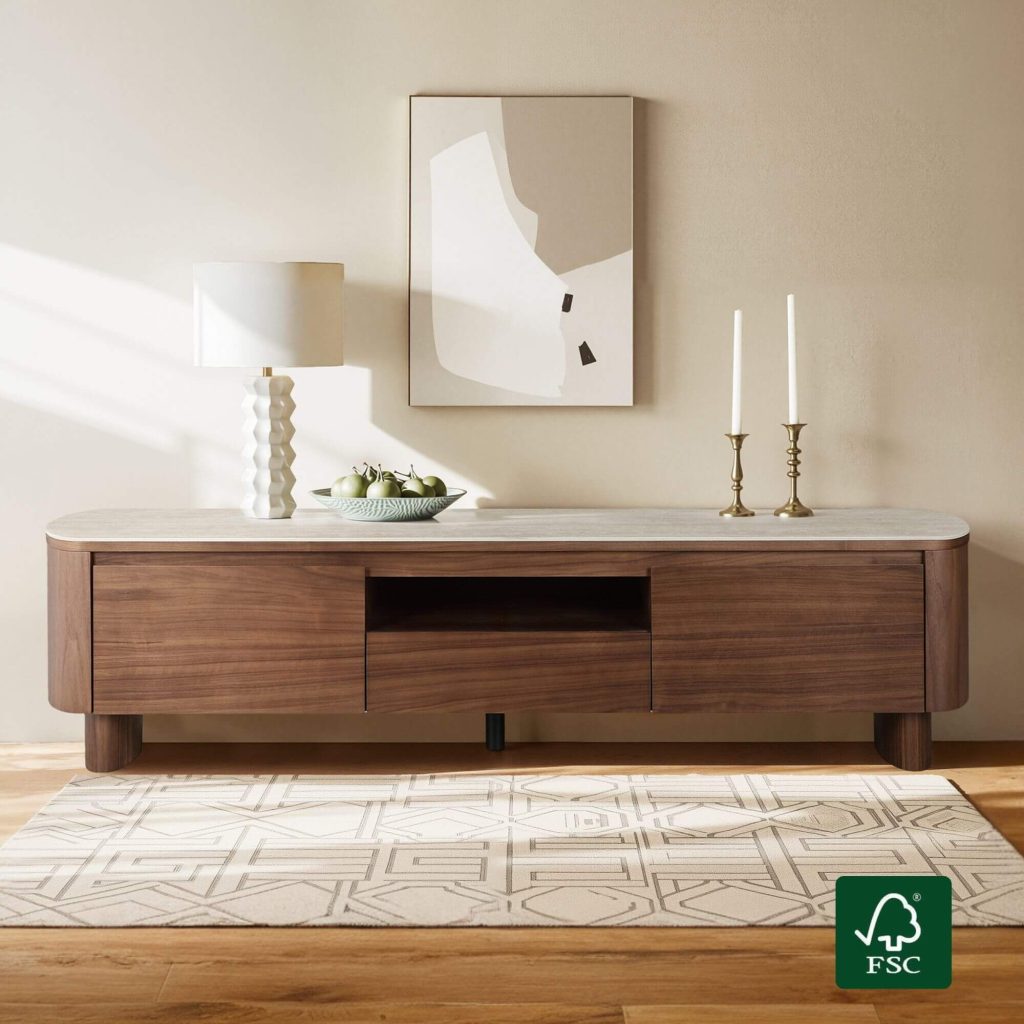
Many modern TV stands incorporate secondary materials for visual interest. Travertine stone panels add a natural, organic texture that pairs especially well with warm wood tones. Woven rattan fronts provide concealed storage while maintaining an airy, textured look associated with Scandinavian and Boho-inspired interiors. Metal frames and hardware in brushed brass or matte black are common in mid-century and industrial styles. These accents aren’t purely decorative — travertine is heat-resistant, rattan allows airflow inside closed compartments, and metal frames add structural rigidity. Chitaliving’s collection integrates these materials across several models, offering a range of combinations suited to different interior styles.
Storage Configurations That Actually Work
Not all storage is equal. A TV stand with six shallow shelves may look impressive but fail to accommodate a single gaming console. Thinking through your actual storage needs before buying prevents this mismatch.
Open Shelves vs. Closed Cabinets
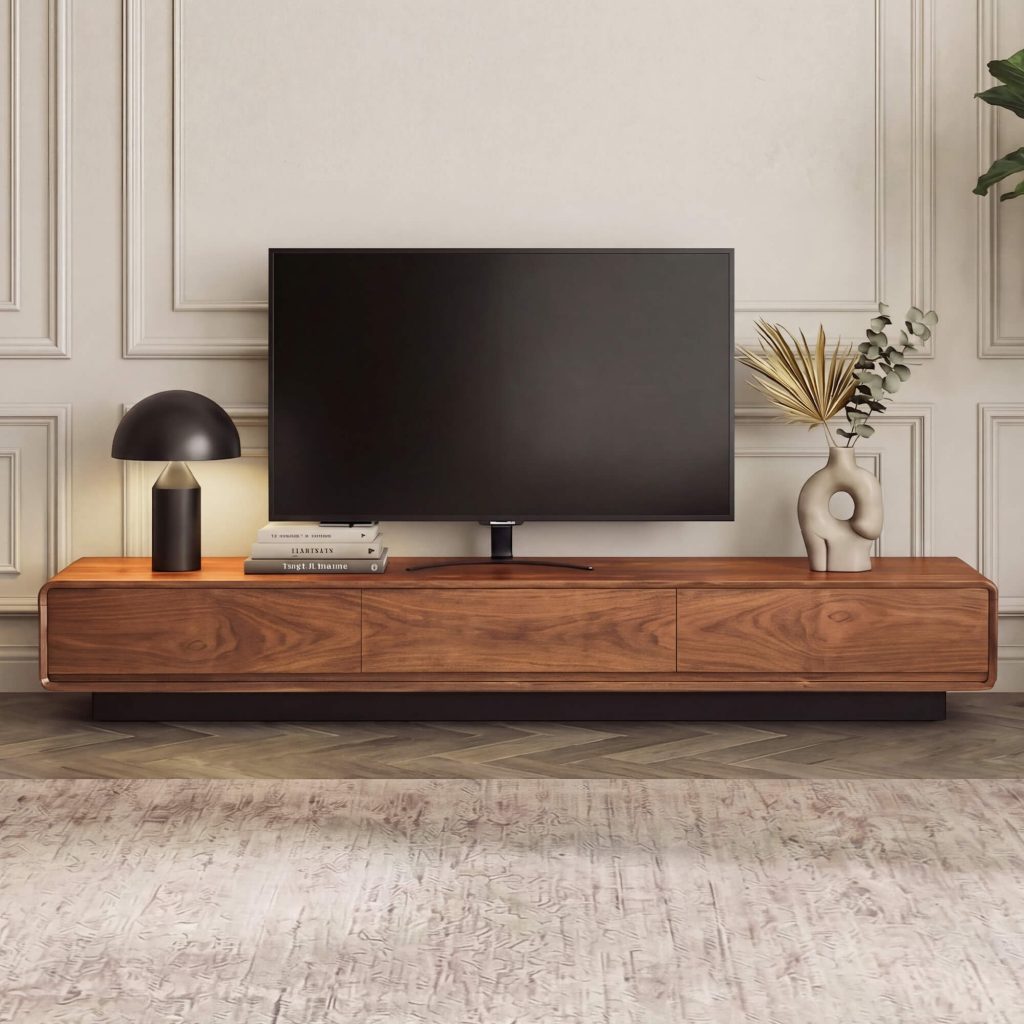
Open shelves provide easy access to components and remotes, and they keep IR signals unobstructed for universal remotes and smart hubs. The downside is visible clutter — every cable and dusty surface is on display. Closed cabinet doors solve the visual problem but require either mesh or perforated panels to allow remote control signals to pass through, and they can trap heat if airflow isn’t designed in. Many modern media consoles combine both: open center shelves for active components and closed side cabinets for less-used items or board games.
Drawers for Small Items
A dedicated drawer in a TV stand is genuinely useful for remote controls, batteries, instruction manuals, and charging cables. Without one, these items inevitably accumulate on top of the stand, creating visual noise that undercuts even the most carefully styled room. Look for drawers with smooth full-extension slides and a depth of at least four inches to hold more than just loose paper.
Cable Management
Built-in cable ports — typically round cutouts in the back panel of each shelf — make a significant practical difference. They let you route power cables and HDMI cords through the stand cleanly rather than having them pool behind or droop over the sides. If the stand you’re considering doesn’t include them, factor in whether you can add aftermarket grommets yourself.
Matching Your TV Stand to Your Interior Style
A TV stand that clashes with the rest of your room’s furniture breaks the visual coherence you’ve worked to create. The good news is that modern TV stands span enough style categories to fit almost any interior direction.
For Scandinavian or minimalist rooms, look for stands with tapered legs, light wood tones like natural oak or ash, and minimal hardware. These emphasize the clean geometry that defines the style. Mid-century modern interiors call for walnut finishes, splayed or angled legs, and brass or brushed gold accents. Contemporary and transitional rooms have more flexibility — matte black metal paired with warm wood works across multiple aesthetics. Coastal and Boho spaces benefit from rattan panel accents and whitewashed or natural finishes that reinforce an organic, relaxed mood.
Finish consistency matters as much as style category. If your sofa legs are walnut-stained wood and your bookshelf is in a similar warm brown, a TV stand in a cool gray or stark white will read as out of place even if it’s otherwise well-made. Pull a single finish or material from existing pieces and use that as your anchor when evaluating options.
Installation and Assembly Considerations
Most modern TV stands arrive flat-packed and require some assembly. The complexity varies widely — some involve fewer than twenty pieces and take under an hour; others with multiple drawers, adjustable shelves, and integrated LED lighting can take half a day. Before purchasing, check whether the brand provides clear assembly instructions and hardware that matches the manual. Lost or mismatched hardware is a common frustration, and quality brands address it by including spares.
Wall anchoring is worth doing regardless of how stable a stand feels when empty. A loaded stand with a large television on top has a high center of gravity, and anchoring it to a stud takes less than ten minutes with the right hardware. Most furniture brands include an anti-tip strap in the box — use it. If yours didn’t come with one, wall-anchor kits are widely available and inexpensive.
Finding the Modern TV Stand That Fits Your Life
The right modern TV stand does more than hold a screen — it organizes your entertainment setup, complements your interior, and holds up through years of daily use. By measuring carefully, choosing a material that matches your durability needs, and matching the design to the rest of your room, you avoid the most common buying mistakes and end up with furniture you won’t need to replace in two years.
Take inventory of what you actually need to store, confirm the dimensions work for both the stand and your viewing angle, and let your existing interior guide the finish and style selection. Whether you’re drawn to solid wood construction, travertine accents, or rattan panel doors, the principles stay the same: prioritize function first, then let the design do its work. The result is a living room focal point that earns its place every day.
