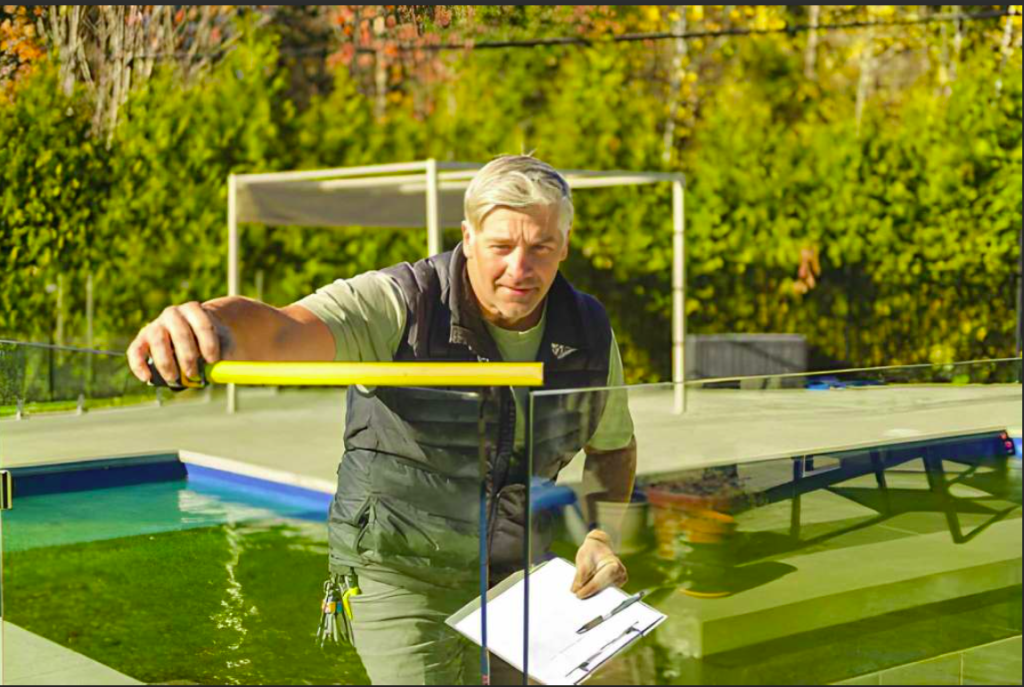
Conforming with Victorian pool fence regulations is a legal requirement for every Victorian property owner with a permanent, temporary or relocatable swimming pool or spa that can hold water over 300mm.
These state regulations have been introduced to minimise preventable drownings and involve registering pool structures with the local council, adhering to defined structural dimensions, and having professional-sized pool safety assessments carried out every four years.
If the barrier is not maintained or a valid certificate is not lodged, it could be subject to high municipal fines.
Today, our agenda explains the technical requirements of the law, including various height parameters, gate-latch requirements, and unambiguous non-climb zones, making it easy for your property to pass with flying colours.
The Core Framework of Victoria’s Pool Safety Legislation
Under Victoria’s property laws, all backyard swimming pools and spas must be fenced with a continuous safety barrier to prevent young children from entering them without adult supervision.
The initial part of the analysis of the Victorian legislation relating to pool fences is the acceptance that the legislation applies to all children, including those living at the premises. The Victorian Building Authority clearly specifies that anything larger than 30cm of water in a pool is subject to compliance.
It doesn’t leave any loopholes for small inflatable pools or portable hot tubs, as they are subjected to the same structural scrutiny as deep in-ground pools.
Moreover, your specific legislative needs depend on the precise date your pool was constructed.
While Victoria has a standard system, there is a multi-level one, with a pool installed in 1990 using a different historical assessment model than one installed since the major changes to the legislation in 2010.
These particular registry details are kept by local councils and inform the land owner which building standard is to be applied to their land.
Dimensional Layouts: Height, Clearances, and Spacing
The fence must match the exact dimensions specified in the state building code to meet legal requirements.
Under Victorian pool fence legislation, the minimum pool fence height is 1200mm at the base of the fence (from the top of the finished ground surface outside the fenced pool area).
The boundary should be firmly intact on all edges. Space directly under the bottom rail of the fence and between the fence and the ground surface should be no more than 100mm, it may be possible for a small child to get under the fence structure.
If it is a fabricated metal fence or vertical timber pickets, then the vertical fence must be spaced less than 100mm apart.
Horizontal timber rails or decorative metal bracing will be considered climbing crosspieces and should be spaced at a minimum of 900mm apart if used as such in your boundary barrier.
| Measurement Feature | Legally Mandatory Structural Dimension |
| Minimum Enclosure Height | 1200mm from the external finished ground |
| Maximum Ground Clearance | 100mm gap between the lower rail and soil/pavement |
| Maximum Vertical Component Spacing | 100mm open gap between panels or pickets |
| Minimum Horizontal Rail Spacing | 900mm separation if the climbing rails face outwards |
| Minimum Boundary Fence Height | 1800mm if the property line forms part of the barrier |
Gate Mechanics and Automatic Latching Systems
In Australia, the most common cause of failure of a domestic backyard enclosure is mechanical failure of the gate.
Regulations require that all entry gates to a pool barrier open only outward (away from the water).
A gate opening with a swinging mechanism pointing towards the pool area is a safety hazard. In addition, the assembly should have an independent and strong self-closing mechanism.
This device should have enough mechanical power to close the gate automatically and to engage the locking mechanism at any position from which it is swung.
The latching point must be at least 1500mm above the external ground level so that young children cannot access it.
Heavy shielding is required if a latch is fitted a significant distance down the inside of the gate, and this type of glass fencing system is not considered to be modern.
Maintaining the 900mm Non-Climbable Zone
The Non-Climbable Zone is a safety zone, invisible to the public, and can only be kept free of household objects and garden plants.
The Victorian pool fence regulations stipulate that a 900mm arc should be formed on the top and face of the pool fence and extend outwards.
There must be no structural projections, ground indentations or loose objects larger than 10mm on the ground that could offer a foothold or handhold in this zone.
Structures such as outdoor chairs, barbecues, steps, tree limbs and large pot plants with stones should be removed from this safety zone altogether.
A neighbouring property shared with the installation, as part of a pool boundary fence, should be at least 1800mm high.
This is to ensure the protection of your property, because you have no legal right to control what is stored on your neighbour’s part of the fence line that they choose to climb on.
Step-by-Step Pathway to Municipal Certification
Fulfilling your safety obligations involves a structured, transparent process with local government offices and independent field inspectors.
- Register the Structure: Submit your pool details to your local council to establish your official construction date and applicable barrier standard.
- Complete a Self-Check: Use a physical checklist to evaluate your gates, clearances, and surrounding trees prior to booking a professional surveyor.
- Engage a Qualified Expert: Secure a professional site audit with an independent, fully licensed provider such as Local Pool & Spa.
- Receive Your Compliance Document: Once your barrier layout passes the mechanical and structural tests, your inspector will issue a Form 23 certificate.
- Lodge the Paperwork: Submit the Form 23 directly to your local council office within 30 days of issuance to secure your four-year safety clearance.
Final Actions
Upholding the structural rules outlined in the state building code is a foundational part of owning a pool in Australia.
By taking a proactive approach to gate checks, clearing your non-climbable zones, and understanding how Victorian pool fence regulations protect young lives, you keep your home safe and avoid costly council fines.
When you are ready to certify your backyard oasis, reach out to the professional team at Local Pool & Spa to book an efficient, stress-free compliance inspection.
Frequently Asked Questions on Victorian Pool Fence Regulations
Is a private pool inspection legally the same as a council one?
Yes, a safety inspection conducted by a private inspector holding valid credentials with the Victorian Building Authority carries the same legal weight as a municipal council audit. Both pathways allow you to lodge your compliance forms successfully.
How much does a pool safety certificate cost in Melbourne?
The total cost usually includes your independent inspection fee, which averages $150-$250, plus a standard local council certificate registration fee of approximately $22.55.
What happens if I fail my first inspection?
If your barrier fails to meet the required standard, you will receive a comprehensive report itemising the required repairs. You are given a sixty-day legal window to complete these minor adjustments before an official re-inspection is required.
Can a private inspector service any area?
Yes, licensed independent pool safety inspectors hold full state certification, enabling them to evaluate properties across all metropolitan and regional areas of Victoria.
