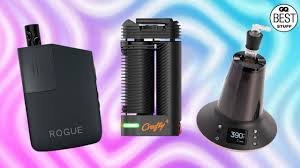
The evolution of the modern vaporiser industry reflects a broader shift toward precision-engineered inhalation systems prioritizing controlled thermal extraction, material efficiency, and user-driven customization. In contemporary markets such as Australia, demand is increasingly concentrated around high-performance devices that integrate hybrid heating architectures, optimized airflow dynamics, and temperature-stable output systems.
Retailers such as Sydney Vaporizers contribute to this ecosystem by supplying advanced devices and supporting components that align with the expectations of experienced users who prioritize performance consistency over entry-level simplicity.
Engineering Principles Behind Modern Vaporisers
At a technical level, vaporisers operate on controlled phase transition principles, where botanical material is heated to a sub-combustion threshold. The objective is not simple heating but selective volatilization of active compounds while minimizing degradation by-products.
Modern devices are engineered around three primary variables:
- Thermal precision
- Airflow resistance calibration
- Material surface interaction dynamics
Each of these directly influences extraction efficiency and vapor density consistency across multiple session cycles.
Heating Architectures and Efficiency Models
Convection-Dominant Systems
Convection-based vaporisers utilize heated air as the primary energy transfer medium. This ensures uniform thermal distribution across material beds, reducing localized overheating and improving compound preservation integrity.
Advanced convection units incorporate:
- Micro-channel airflow routing
- Thermal buffer chambers
- Ceramic heat exchangers
These elements stabilize temperature fluctuation during draw activation phases.
Conduction Systems with Thermal Mass Optimization
Conduction platforms rely on direct chamber contact heating. In higher-tier models, thermal mass is calibrated to maintain equilibrium between ramp-up speed and heat retention stability.
Engineering improvements include:
- Isolated chamber wall conductivity zoning
- Multi-layer heat diffusion plating
- Rapid equilibrium feedback loops
Hybrid Heating Integration
Hybrid vaporisers merge both conduction and convection pathways to achieve dual-phase extraction profiles. This architecture is widely regarded as the benchmark in premium portable systems due to its ability to maintain vapor density consistency across variable draw intensities.
Airflow Dynamics and Resistance Profiling
Airflow architecture is a critical determinant of vaporiser performance, often overlooked in lower-grade devices.
High-end systems implement:
- Laminar flow channeling
- Pressure-balanced intake pathways
- Anti-turbulence chamber geometry
These features reduce draw resistance while maintaining vapor density concentration. In optimized systems, airflow is engineered to synchronize with heating curves, ensuring that vapor production scales proportionally with inhalation force.
This synchronization eliminates common inefficiencies such as uneven extraction or localized overheating.
Temperature Control Precision and Stability Curves
Temperature regulation is not simply a functional feature but a performance determinant. Advanced vaporisers operate within tightly controlled thermal tolerances, often within ±1–3°C variance ranges.
Key control mechanisms include:
PID-Based Regulation Systems
Proportional-integral-derivative control loops continuously adjust heating output to maintain equilibrium between setpoint and real-time chamber feedback.
Sensor-Driven Calibration
Embedded thermistors and micro-sensors monitor internal chamber conditions, adjusting output dynamically to maintain vaporization thresholds without overshoot.
Multi-Zone Thermal Mapping
Higher-tier devices segment heating regions to ensure uniform distribution across full load capacity, preventing hotspot formation and uneven extraction.
Material Science and Chamber Composition
Material selection significantly influences vapor purity, thermal response, and device longevity.
Medical-Grade Stainless Steel Systems
Used for structural integrity and thermal stability, stainless steel chambers provide high resistance to thermal degradation and maintain neutral flavor profiles under extended use cycles.
Ceramic Vapor Pathways
Ceramic elements are utilized for their low thermal conductivity variance and chemical inertness, ensuring vapor purity is not compromised by reactive surfaces.
Zirconia Cooling Assemblies
Zirconia-based components are increasingly integrated into cooling pathways due to their ability to reduce vapor temperature without flavor distortion.
Vapor Density Modulation and Extraction Efficiency
Modern vaporisers are engineered to support variable extraction profiles based on user-defined thermal gradients. This allows dynamic control over vapor density output and compound ratio activation.
Key modulation techniques include:
- Stepped temperature ramping
- Session-based heat cycling
- Real-time airflow recalibration
These systems ensure that extraction efficiency remains stable even as material density decreases during usage.
Device Stratification in the Australian Market
Within Australia, vaporiser adoption is increasingly segmented into three distinct performance tiers rather than consumer-grade classifications.
Performance Tier One: Entry Efficiency Systems
These devices prioritize portability and operational simplicity, typically utilizing conduction-dominant heating with limited configurability.
Performance Tier Two: Balanced Hybrid Systems
Mid-tier vaporisers incorporate hybrid heating and expanded temperature ranges, offering a balance between portability and extraction efficiency.
Performance Tier Three: Precision Engineered Systems
High-end devices emphasize medical-grade thermal control, advanced airflow engineering, and multi-layer cooling systems designed for sustained performance stability.
Retail availability through platforms such as Sydney Vaporizers ensures access to verified devices aligned with these performance categories.
Accessory Integration and System Optimization
In advanced vaporisation ecosystems, accessories are not auxiliary—they are performance multipliers.
Airflow Enhancement Modules
Glass adapters and cooling attachments modify vapor temperature curves and reduce thermal harshness at the inhalation stage.
Pre-Dosed Loading Systems
Capsule-based loading systems standardize material density, ensuring consistent chamber fill ratios and repeatable extraction cycles.
Maintenance Calibration Kits
Precision cleaning systems maintain airflow integrity and prevent resin-induced resistance buildup across extended usage periods.
Thermal Efficiency and Energy Utilization Metrics
Modern vaporisers are increasingly evaluated based on energy-to-extraction efficiency ratios. Devices that maximize active compound release per watt-hour of energy consumption are considered superior in engineering efficiency.
Key metrics include:
- Heat-up cycle latency
- Recovery time between draws
- Sustained output stability under continuous operation
Advanced systems minimize energy waste through predictive heating algorithms that anticipate draw activation patterns.
Structural Durability and Lifecycle Engineering
Long-term device reliability depends on structural engineering and material fatigue resistance. Premium vaporisers are designed with lifecycle modeling that accounts for repeated thermal cycling stress.
Key structural enhancements include:
- Reinforced internal chassis frameworks
- Shock-resistant battery encapsulation
- Heat-isolated electronic compartments
These improvements extend operational lifespan while maintaining performance consistency.
Market Evolution and Demand Sophistication
The Australian vaporiser market is transitioning from general-purpose adoption to performance-driven specialization. Users are increasingly informed about technical specifications such as airflow resistance, heating architecture, and thermal recovery efficiency.
This shift has elevated demand for devices that deliver measurable performance improvements rather than basic functionality.
Retailers like Sydney Vaporizers operate within this evolving landscape by curating devices that align with advanced user expectations and compliance standards.
Conclusion
The modern vaporiser is no longer a simple heating device but a precision-engineered thermal extraction system defined by airflow architecture, temperature regulation accuracy, and material science integration.
As the market continues to mature, performance expectations will increasingly center around efficiency metrics, thermal stability, and system-level optimization rather than surface-level features.
In this context, high-quality devices and accessories sourced through established platforms such as Sydney Vaporizers represent a structured approach to achieving consistent, controlled, and optimized vaporisation performance in the Australian market.
